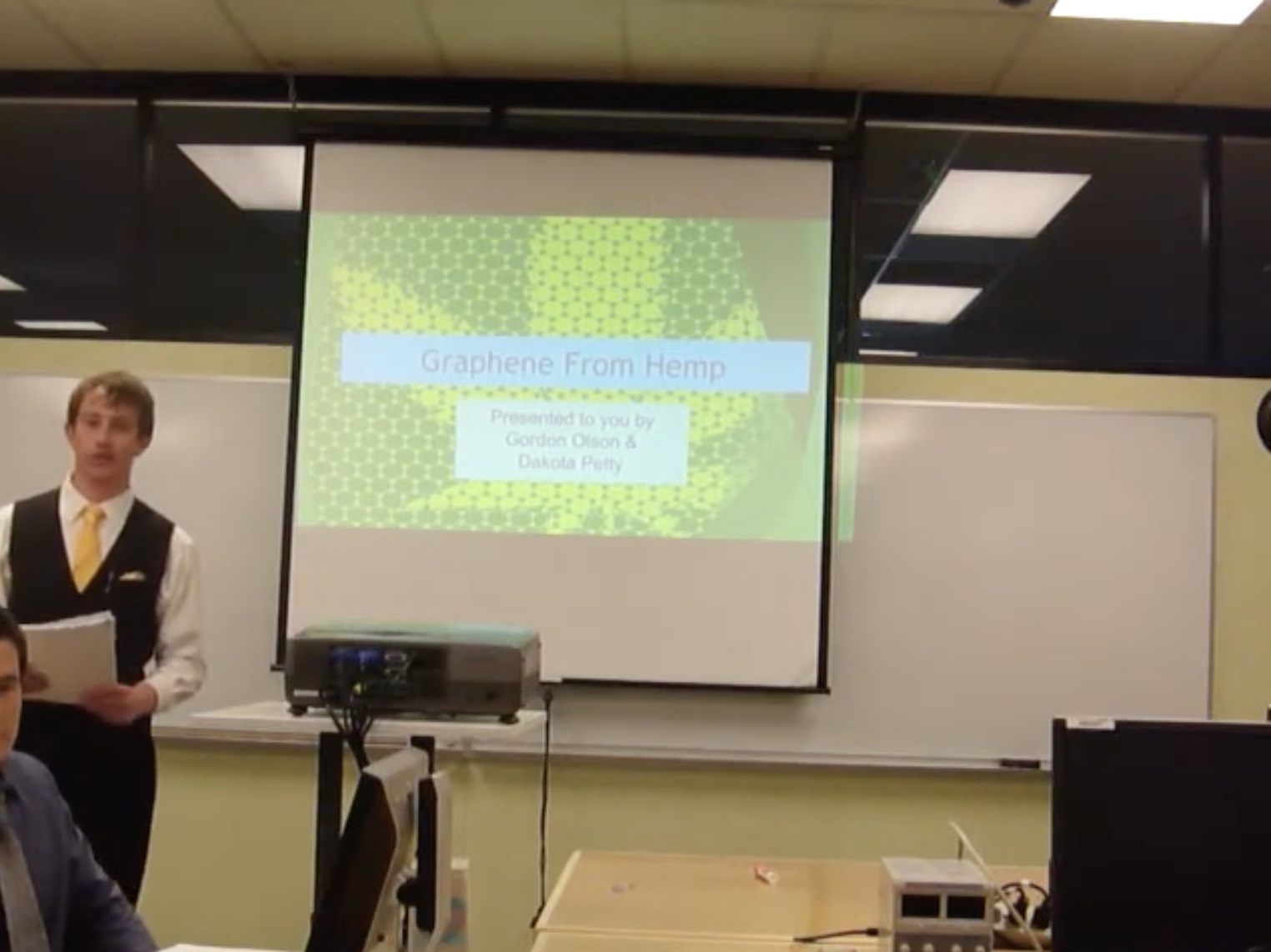
The original 2014 hypothesis started from a simple but ambitious question: if graphene is carbon arranged in an extraordinary structure, could hemp derived carbon become a practical starting point for graphene like materials?
The idea had three layers. The first was the light layer: graphene's interaction with photons mattered because absorption and electron transitions help explain why a one atom thick material can still show unusual optical and electronic behavior. The second was the experimental context layer: graphene does not reveal every property in one fixed way. The way it is prepared, excited, measured, doped, defected, or constrained changes which behavior becomes visible. The third was the material property layer: strength, transparency, conductivity, surface area, and energy performance are not separate magic traits; they connect back to graphene's structure and the conditions used to activate or measure it.
That was advanced territory for a freshman presentation. I was not claiming to have completed a lab breakthrough. I was trying to connect hemp derived carbon, graphene like structure, light/electron behavior, and high performance material properties into one coherent technical argument.
Later work made that original instinct look much more serious. Researchers showed that hemp bast fiber could be processed into interconnected carbon nanosheets for high performance supercapacitor electrodes, which supported the materials side of the hypothesis. Graphene optics research also made the light/electron side more concrete: graphene's optical response is tied to electronic transitions and can be changed by physical conditions. The value of this artifact is that the original direction was already aimed at real material science questions years earlier.